









Cold Press Juicer
★★★★★ 4.65 · 325 reviews

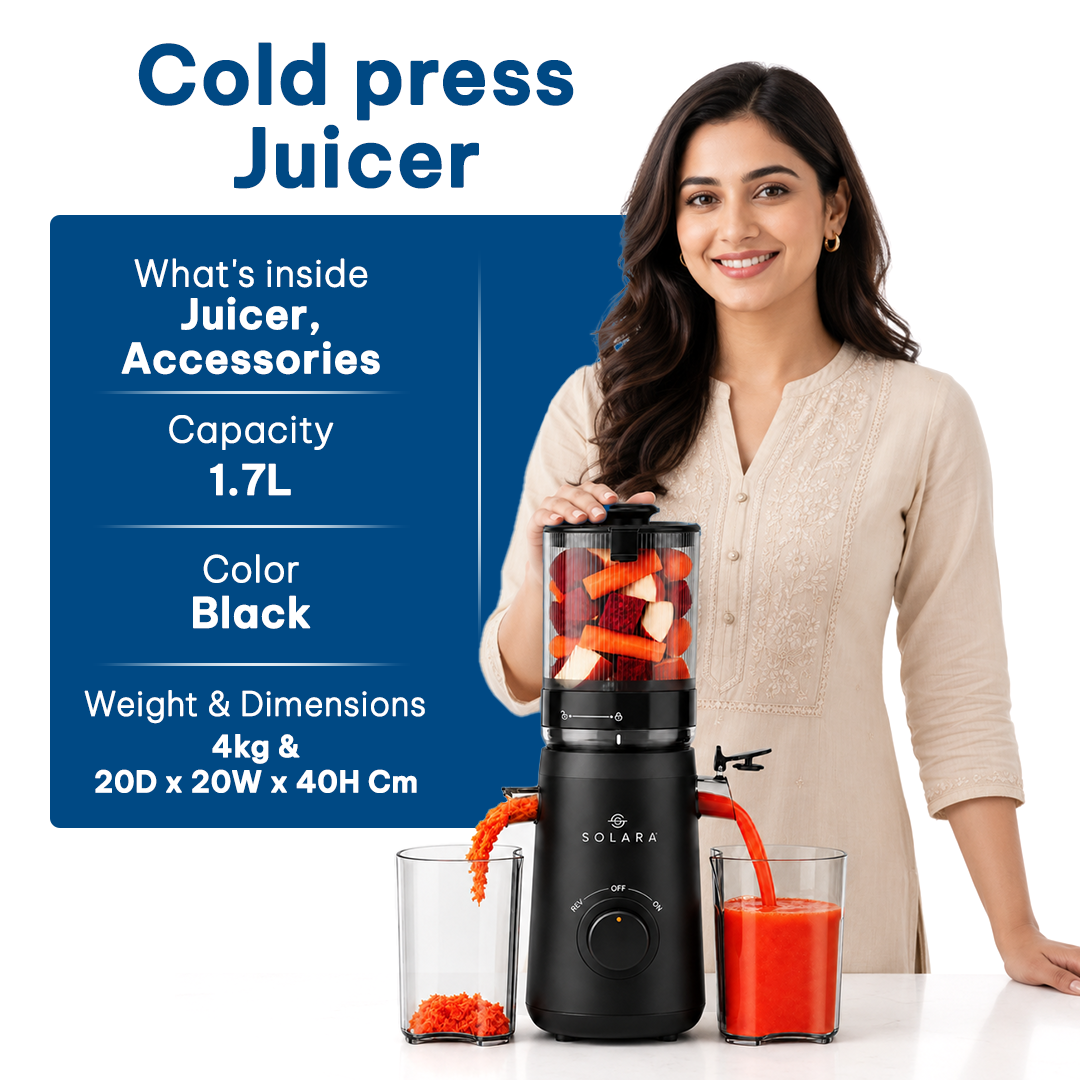
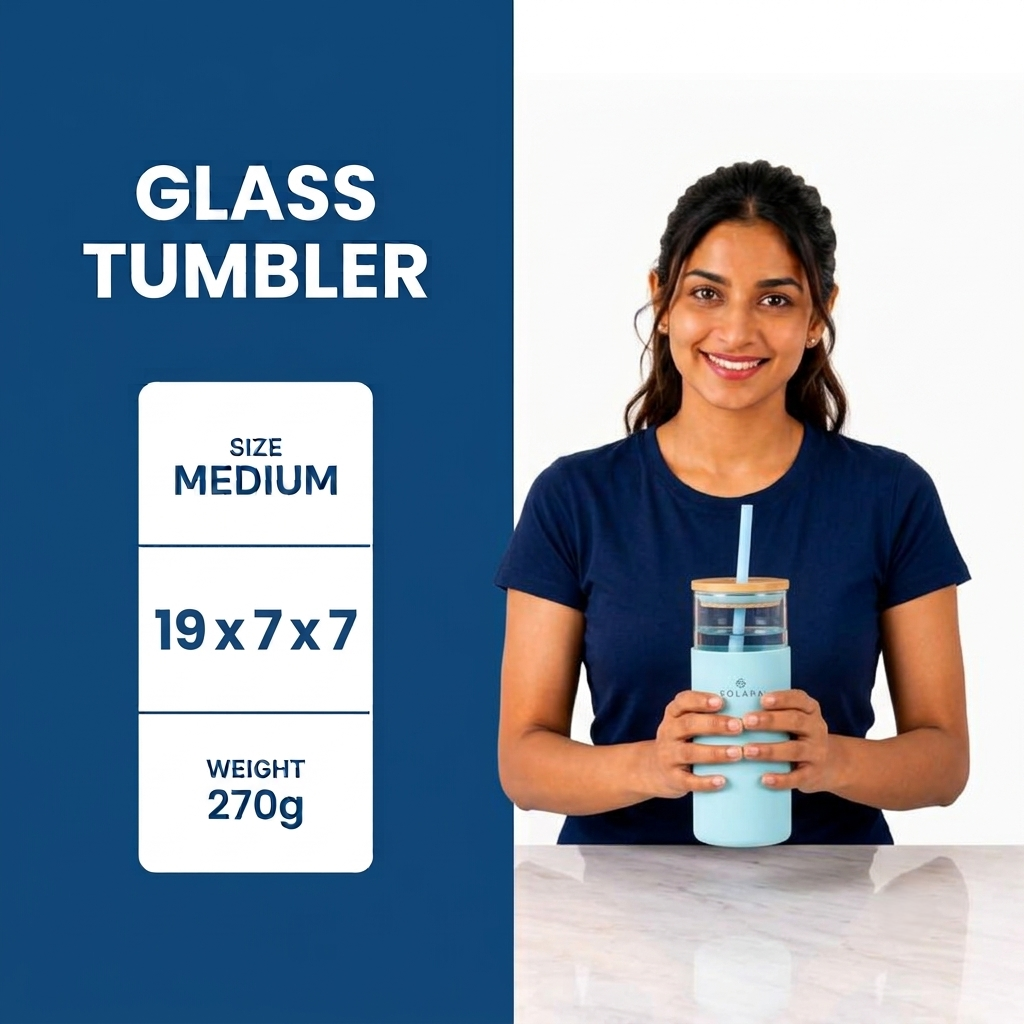
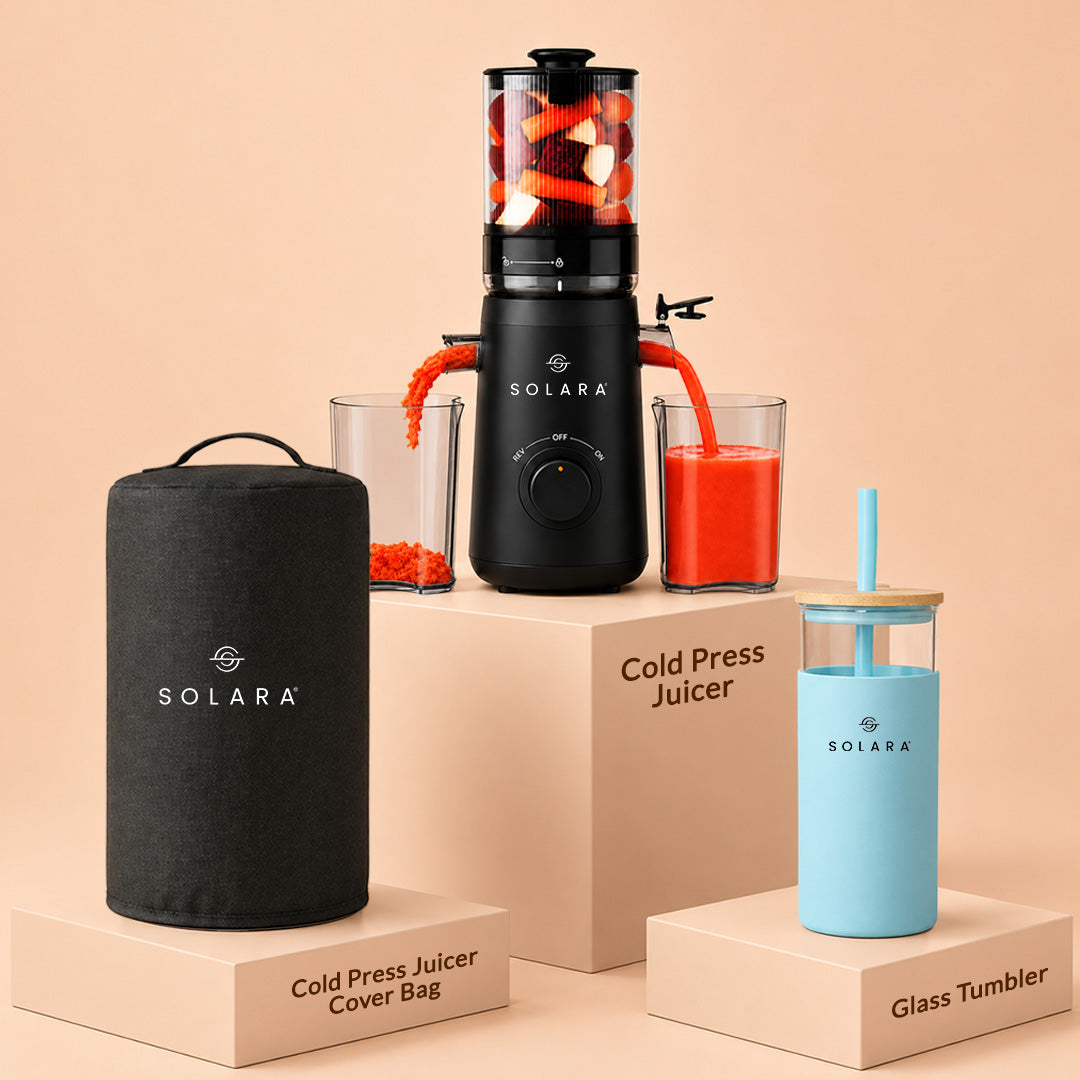
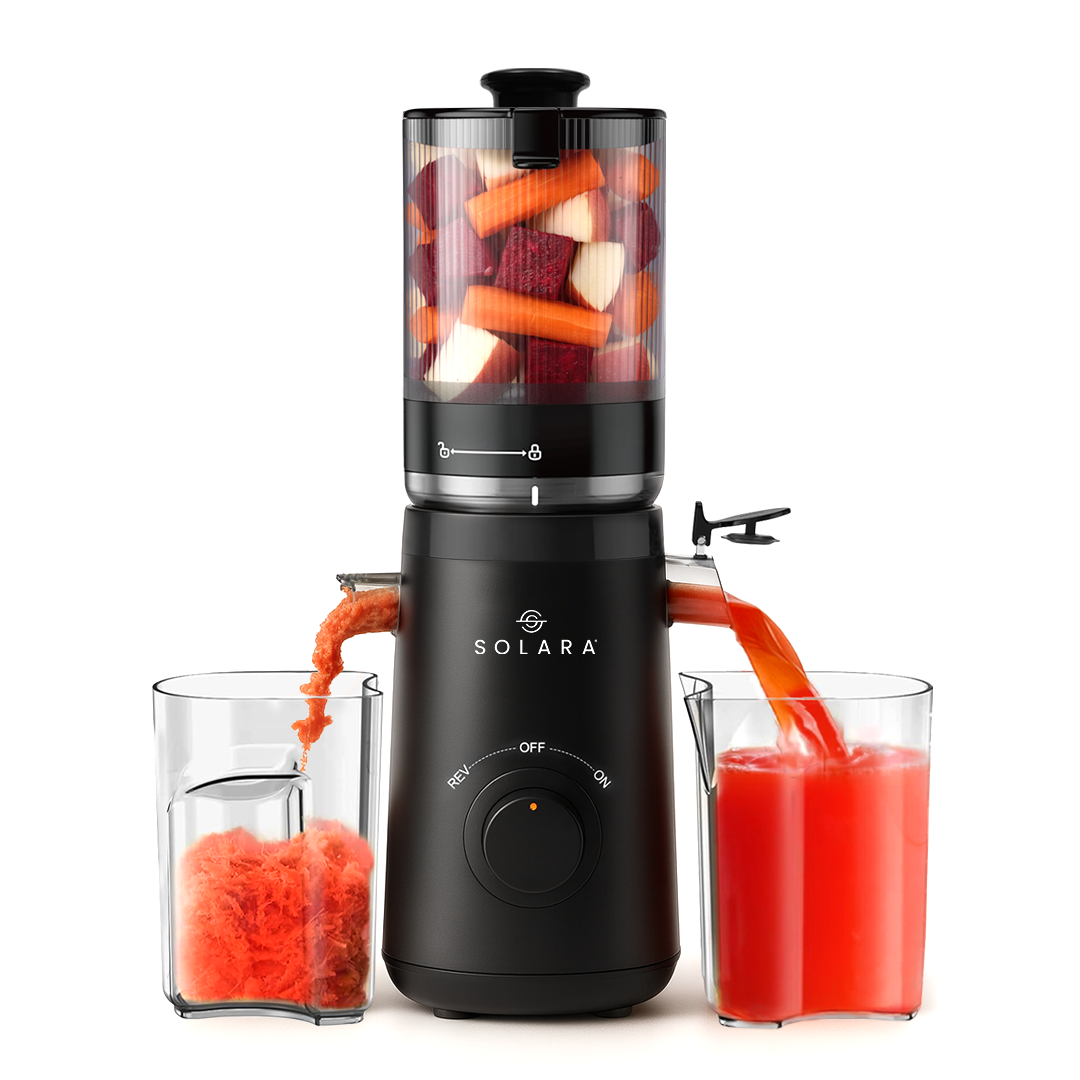


Cold Press Juicer

No Mess Juicing

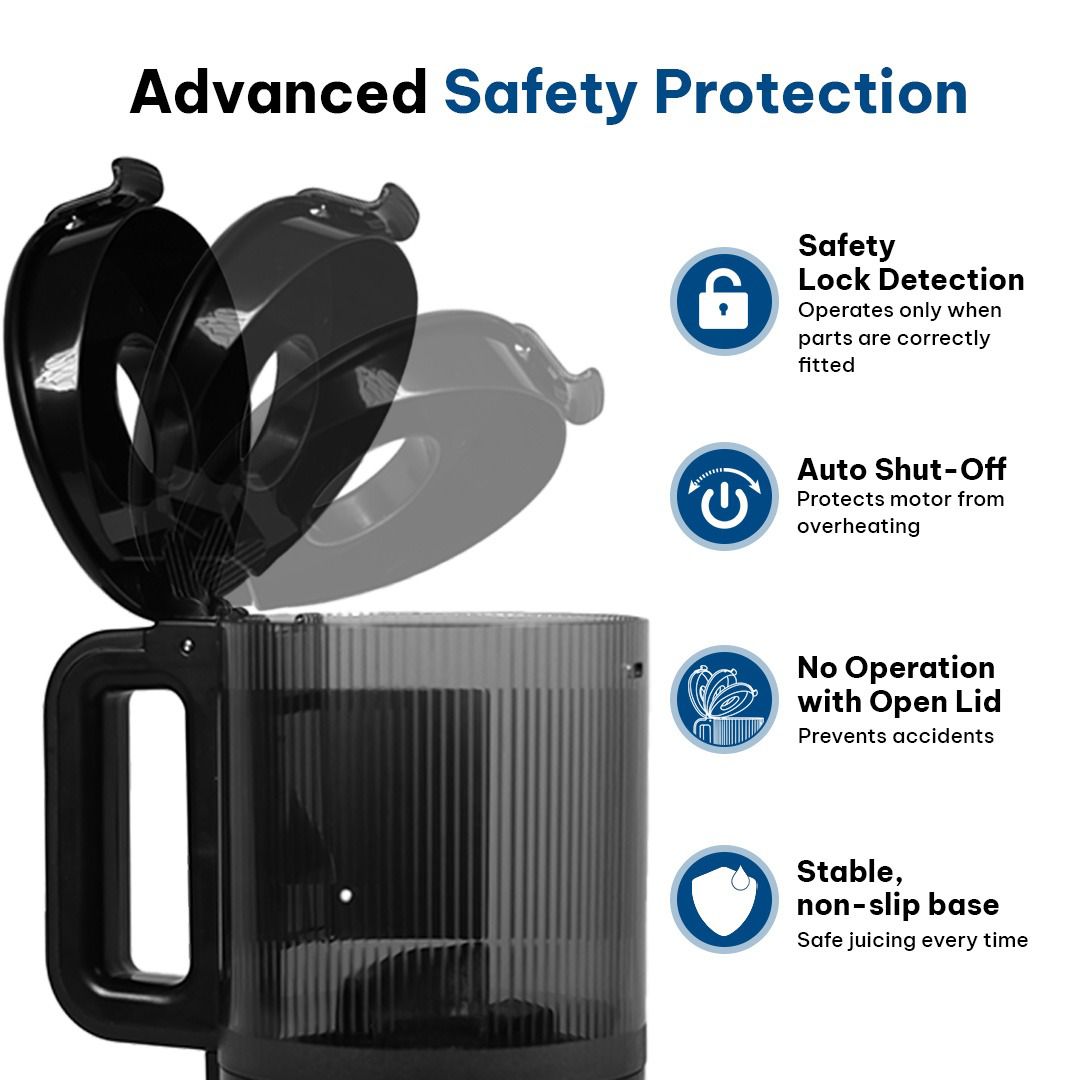
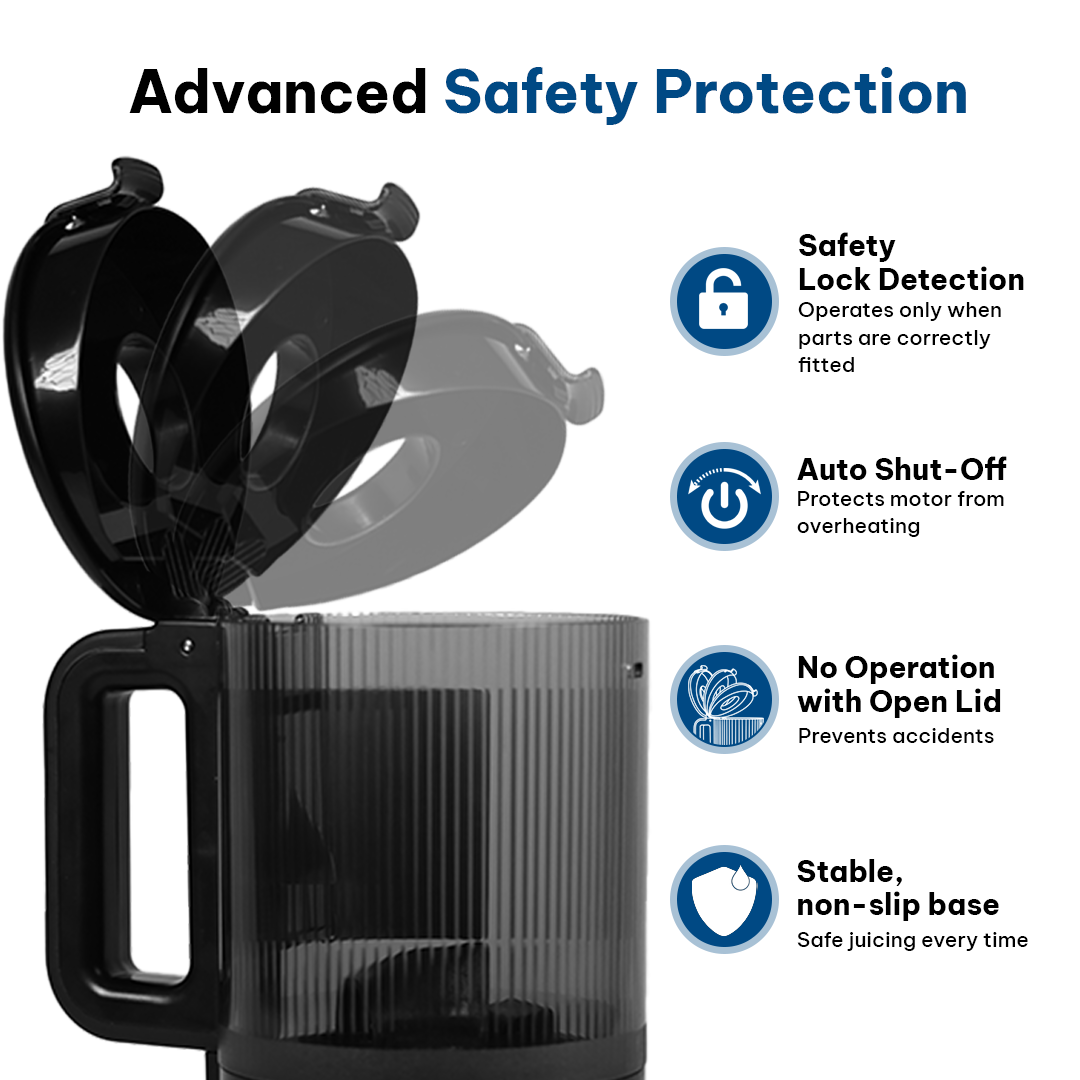
Safe for Daily Use

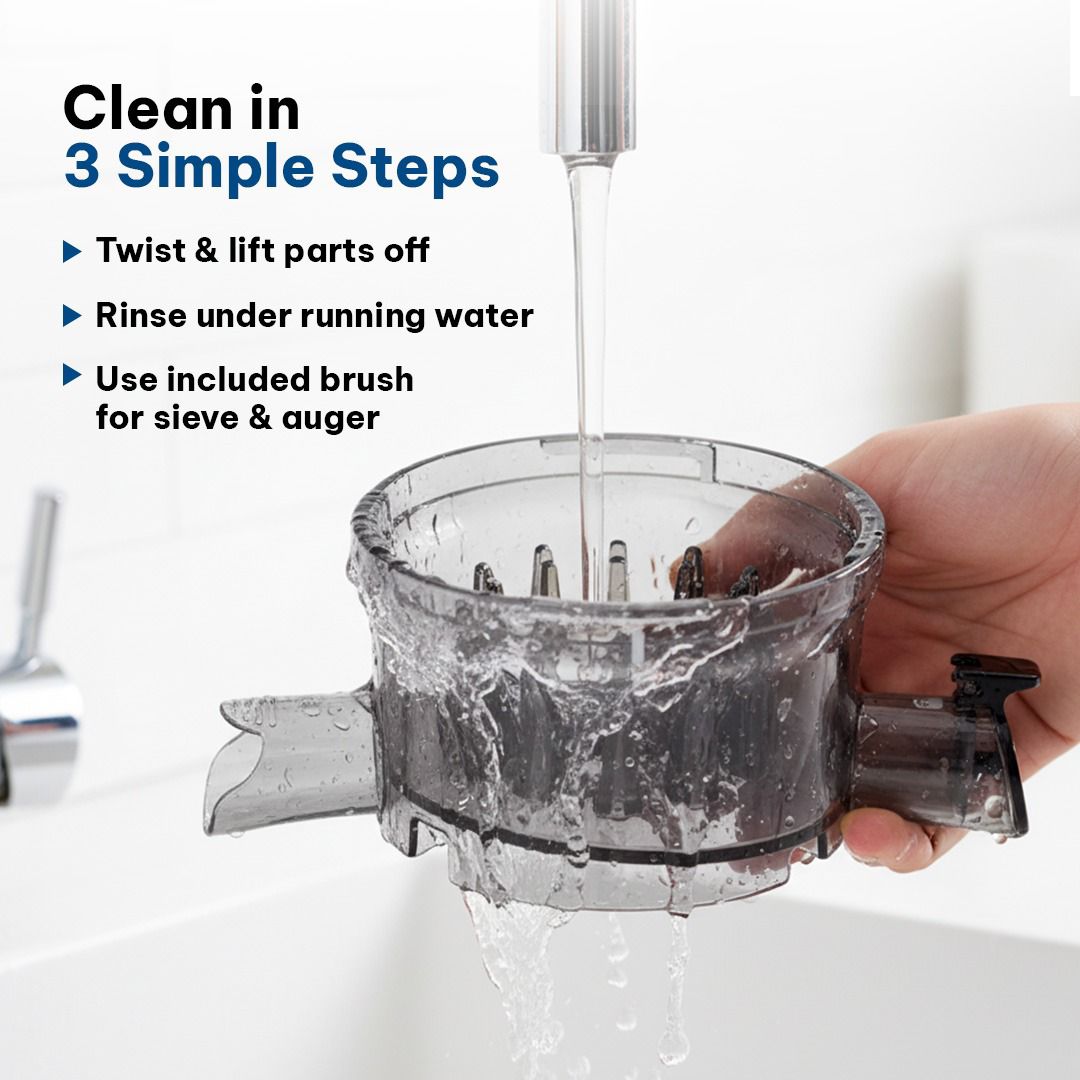
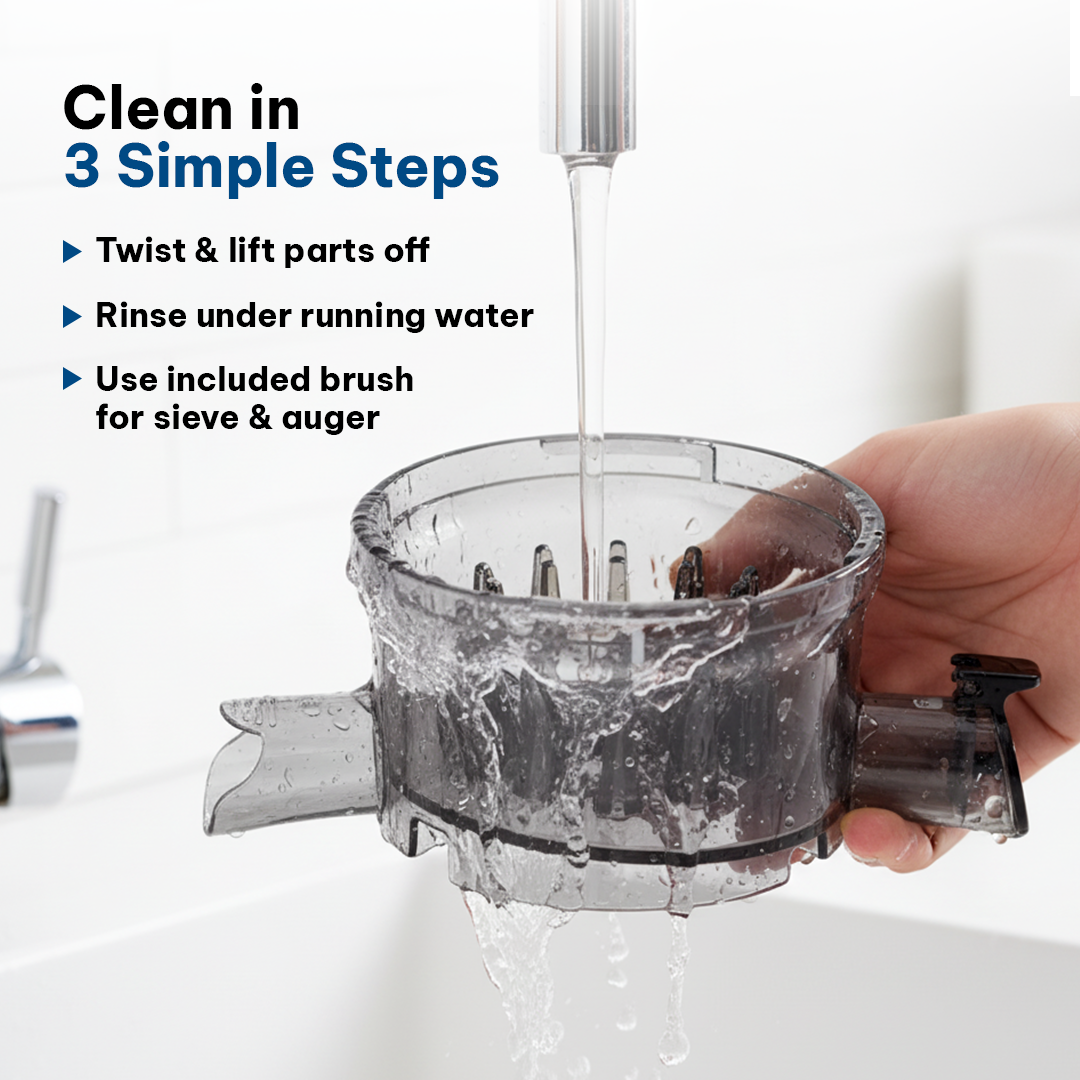
60-Sec Cleanup

Quiet Operation


Calculate Your Savings
Stop buying bottled juice. Start pressing fresh. Save BIG.
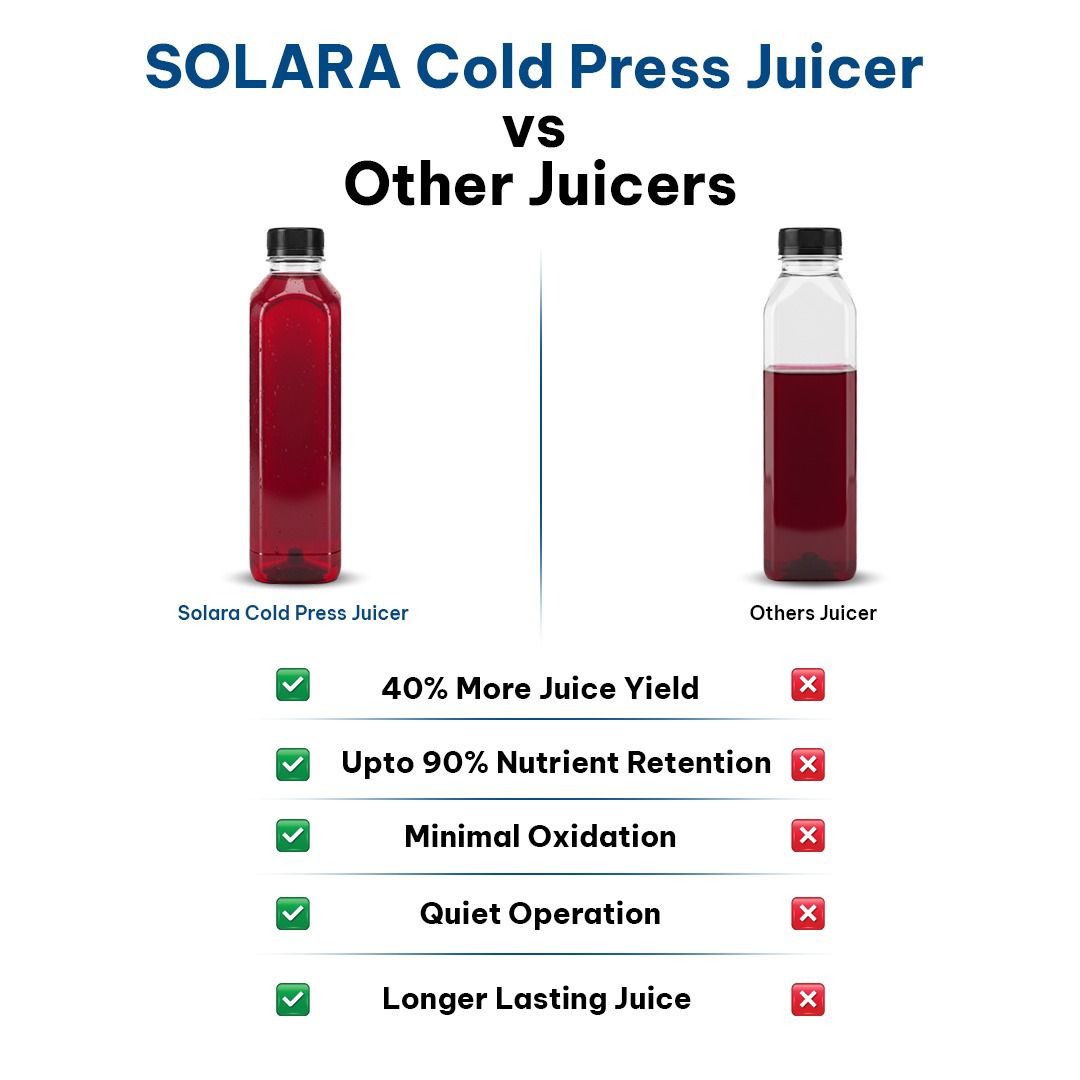
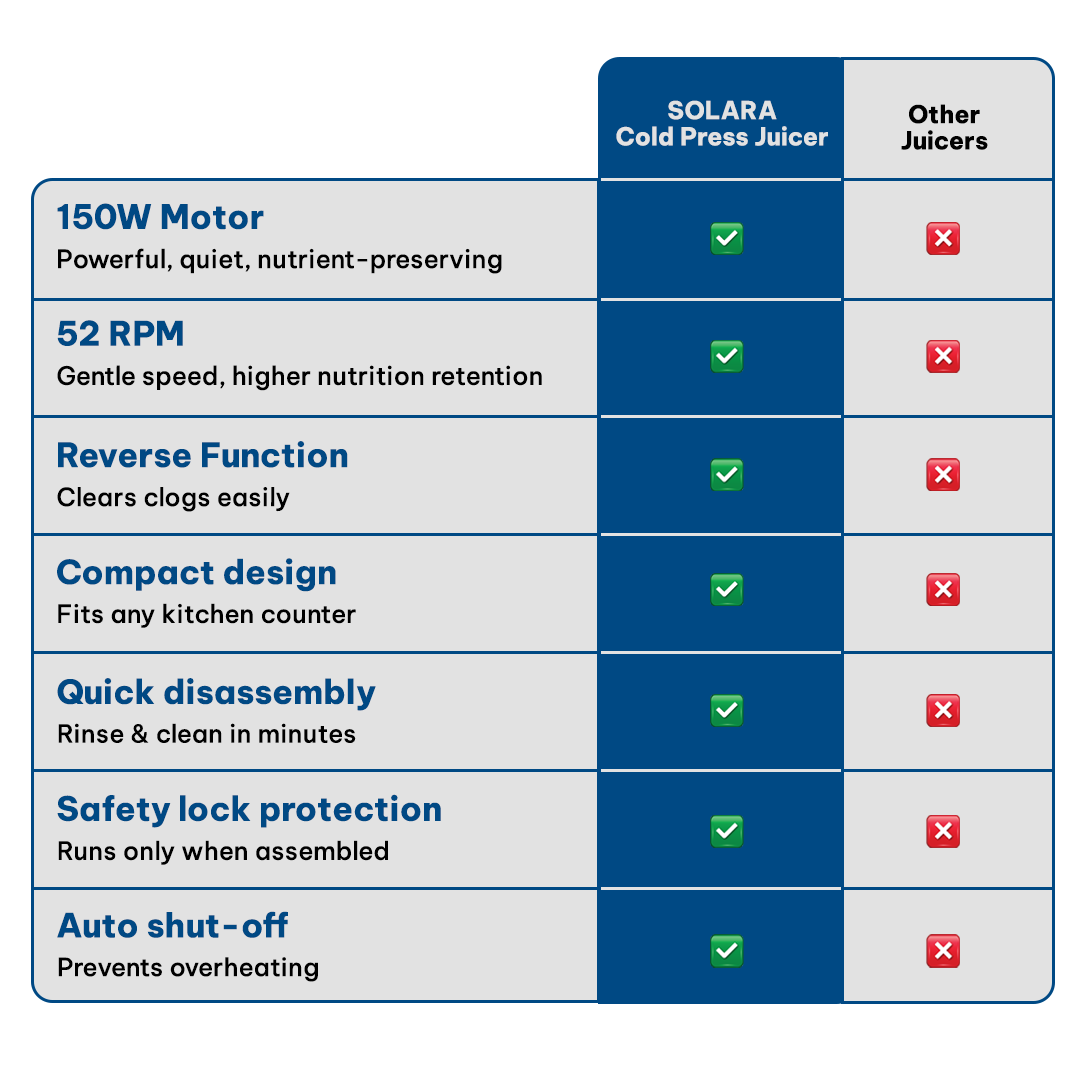
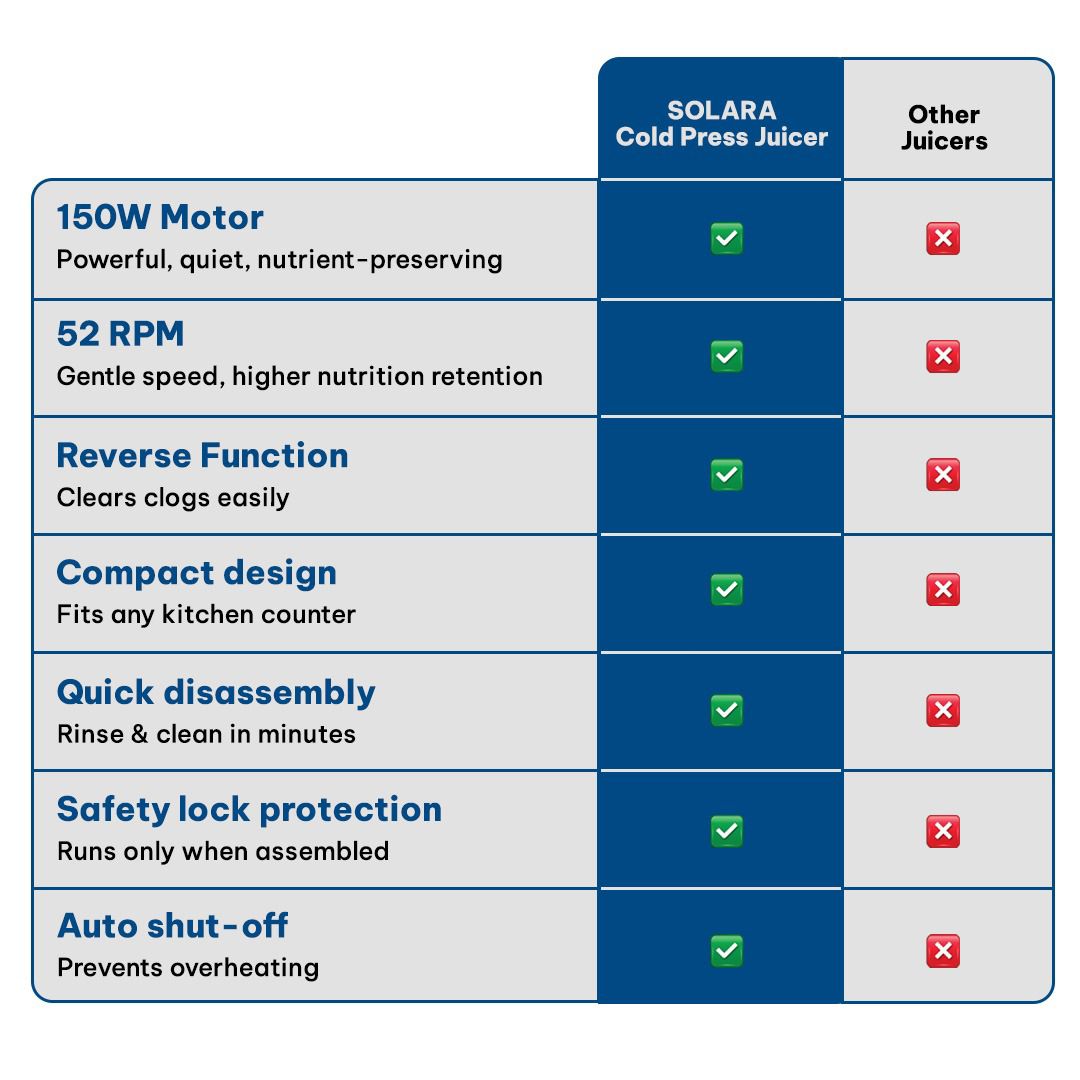
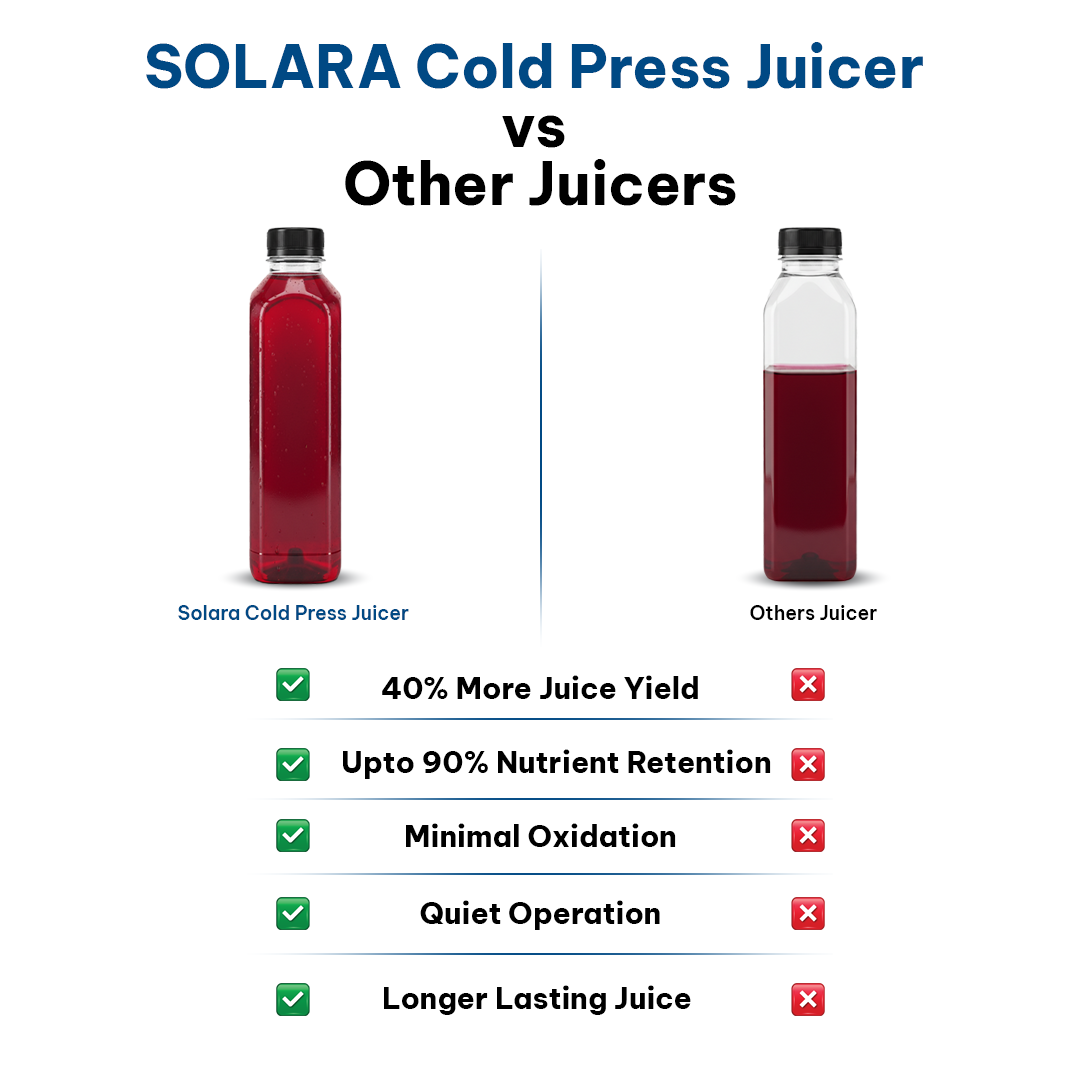
👉 Here's exactly why Cold Press wins on every dimension — see the side-by-side below.

More Juice, Less Waste
Extract up to 40% more juice from fruits and veggies with SOLARA’s slow juicing technology. Enjoy every drop of freshness while leaving behind dry pulp – more value, less waste.

Lock in 2x More Nutrients
Cold press extraction preserves up to 90% of vitamins, minerals, and antioxidants. That means every sip is packed with pure energy, better absorption, and real health benefits.

Mesh-Free, Easy Clean
The new mesh-free filter system means no more stubborn pulp stuck in tiny holes. Enjoy smoother juice, faster rinsing, and stress-free cleaning – making healthy juicing part of your everyday routine.

Leak-Proof, Stress-Free
A sealed design between the hopper and juicing bowl prevents overflowing and leaks, so you can juice anytime without the mess – whether it’s your morning detox or a quick family health boost.

Juice On Your Schedule
Morning detox, post-workout recharge, or family health boost – the SOLARA Juicer is always ready to give you fresh juice in minutes.

Quietly Powerful
Enjoy your morning juice without the noise. At just 72 dB, the SOLARA Juicer runs quietly, so you can blend health into your routine without disturbing your home. Perfect for early mornings or late-night cravings.

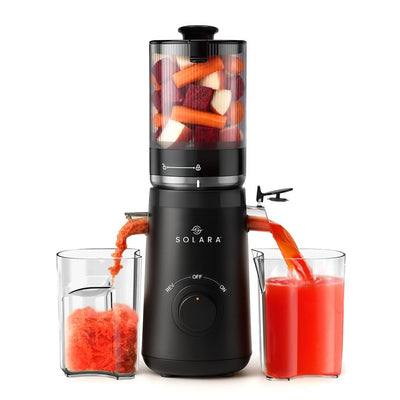
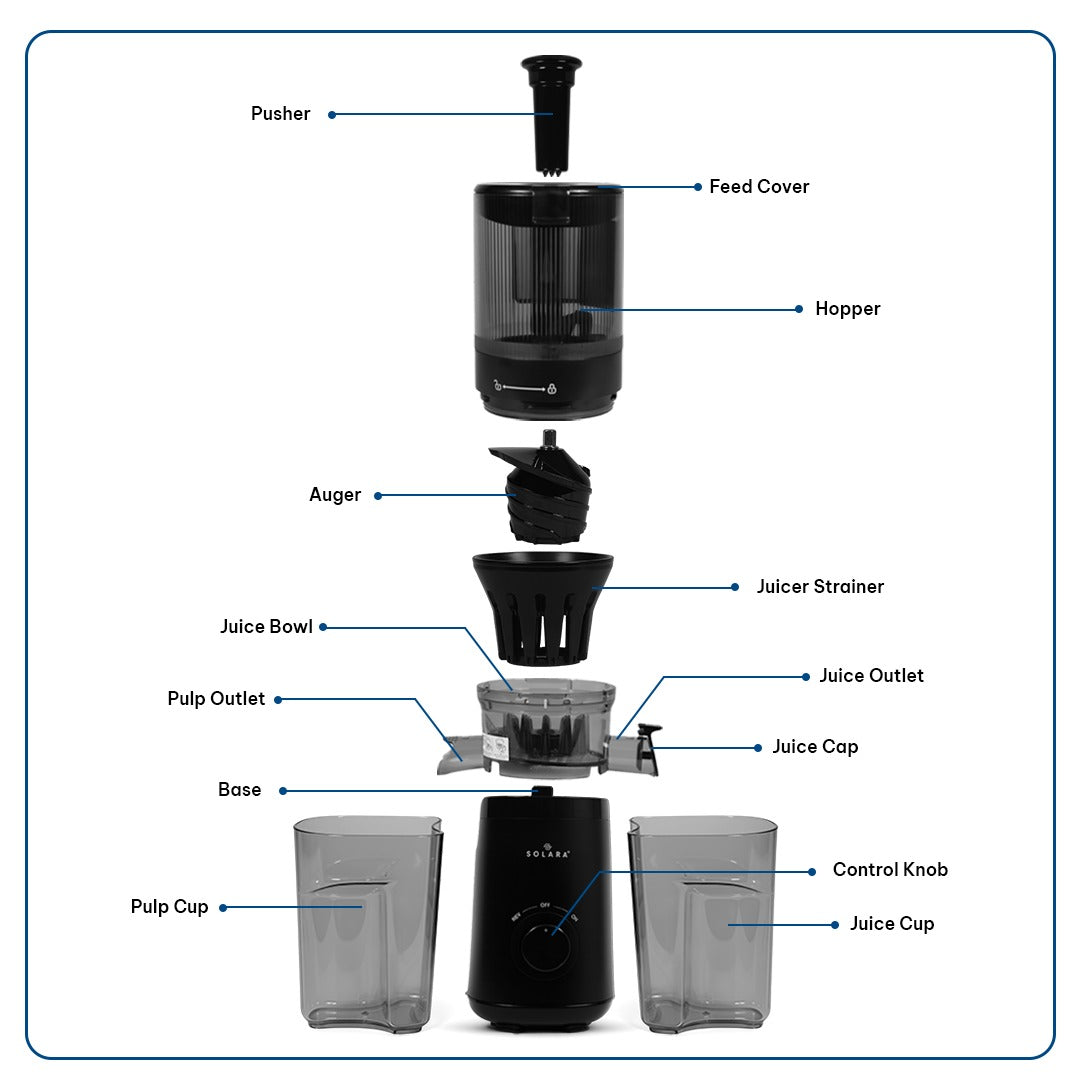
Auger
Spiral screw that slowly crushes and presses fruits/veggies to extract juice.

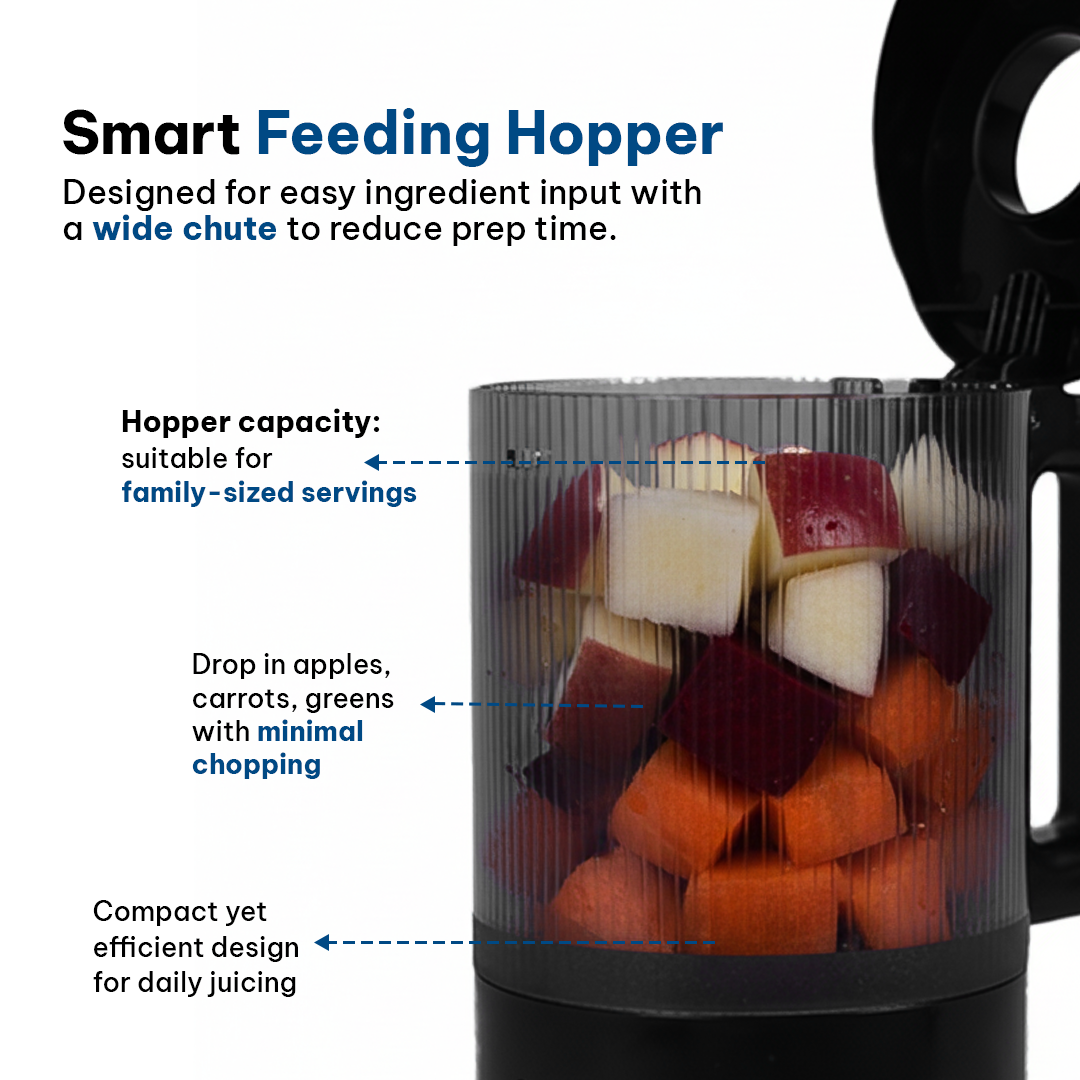
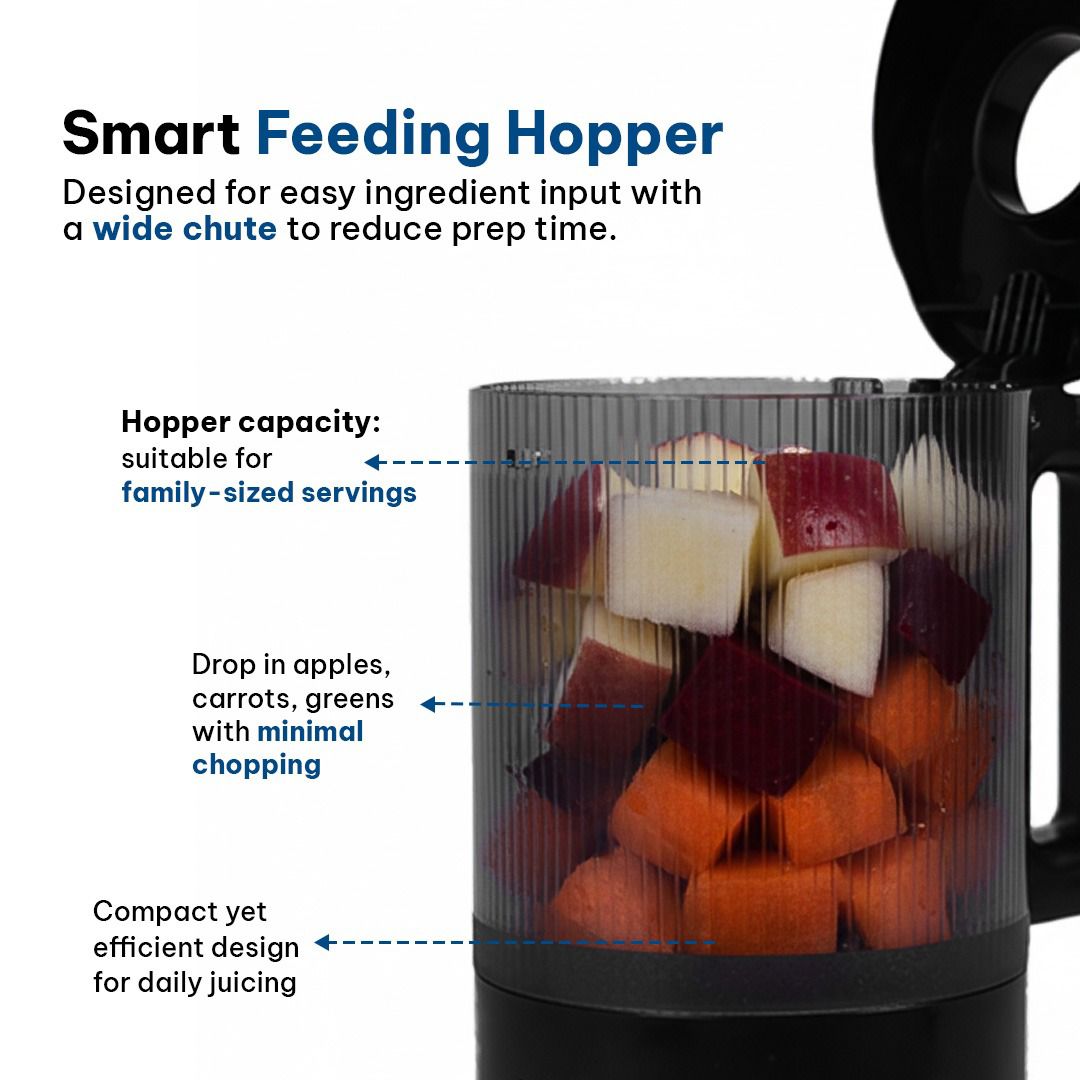
Hopper
The top feed opening where fruits and vegetables are inserted for cold-press extraction.

Juice Bowl
The BPA-free juice collection bowl that catches and holds fresh juice before pouring.

Juice Filter/Strainer
Fine filter that separates juice from pulp for smooth, consistent juice.

Motor Unit
The core power unit that drives slow, cold-press extraction for high juice yield.

Pusher
Helps safely push produce down through the feed chute.

Pulp Container
Collects leftover pulp after juice extraction.
🍊 Why Cold Press Over Bottled Juice?
Bottled juice
Cold Press by SOLARA 🏆
SOLARA JUICER MODEL
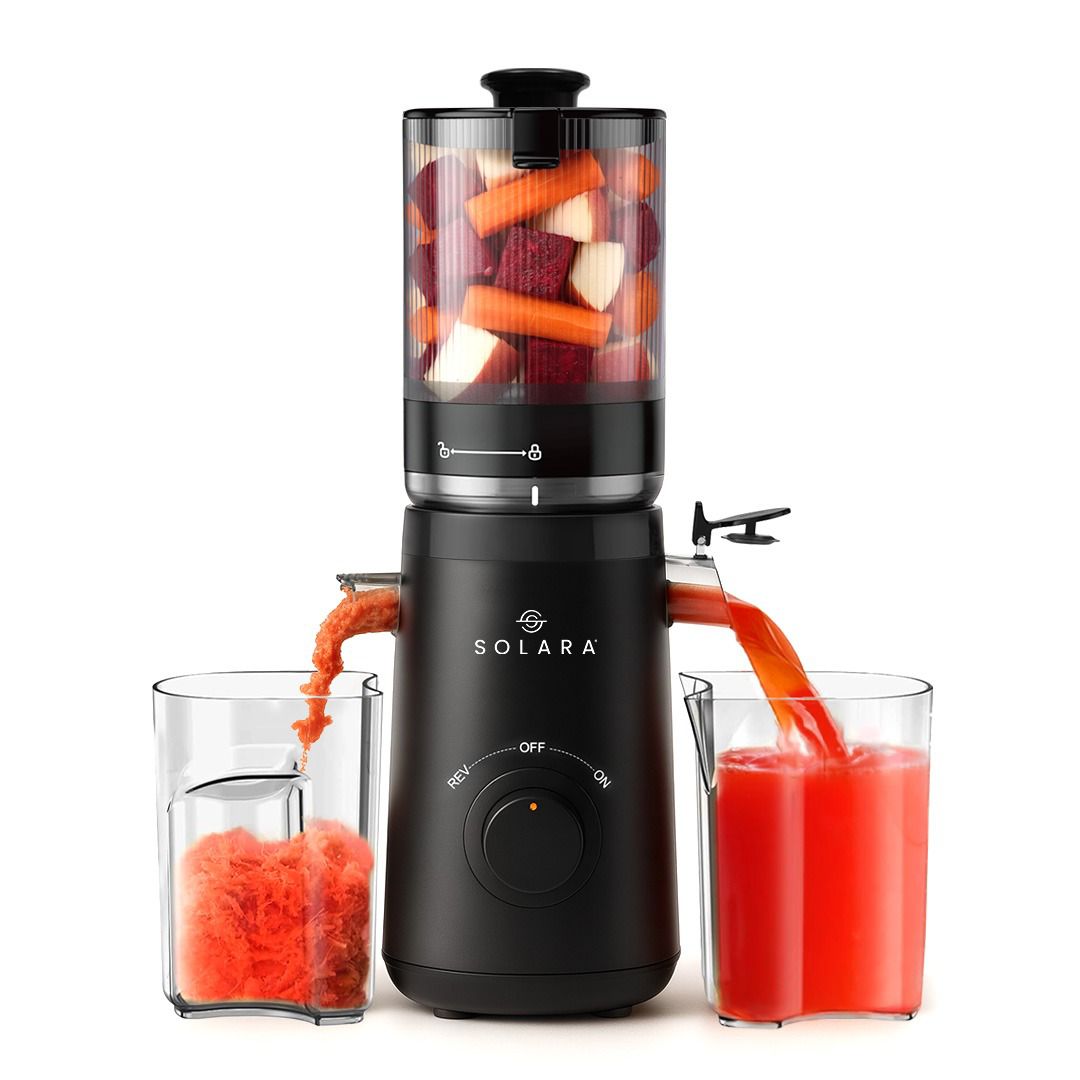
Meet The SOLARA Cold Press Juicer
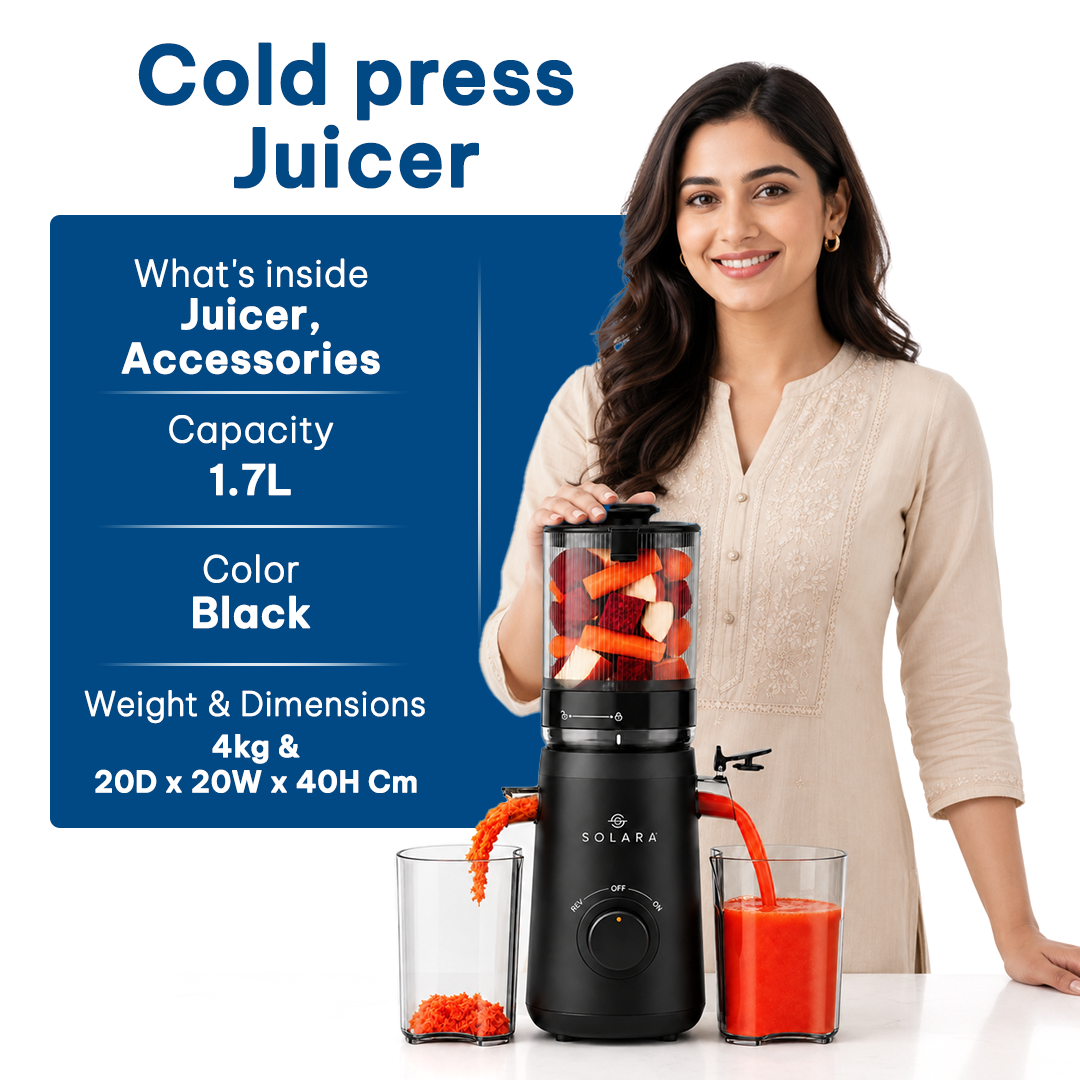
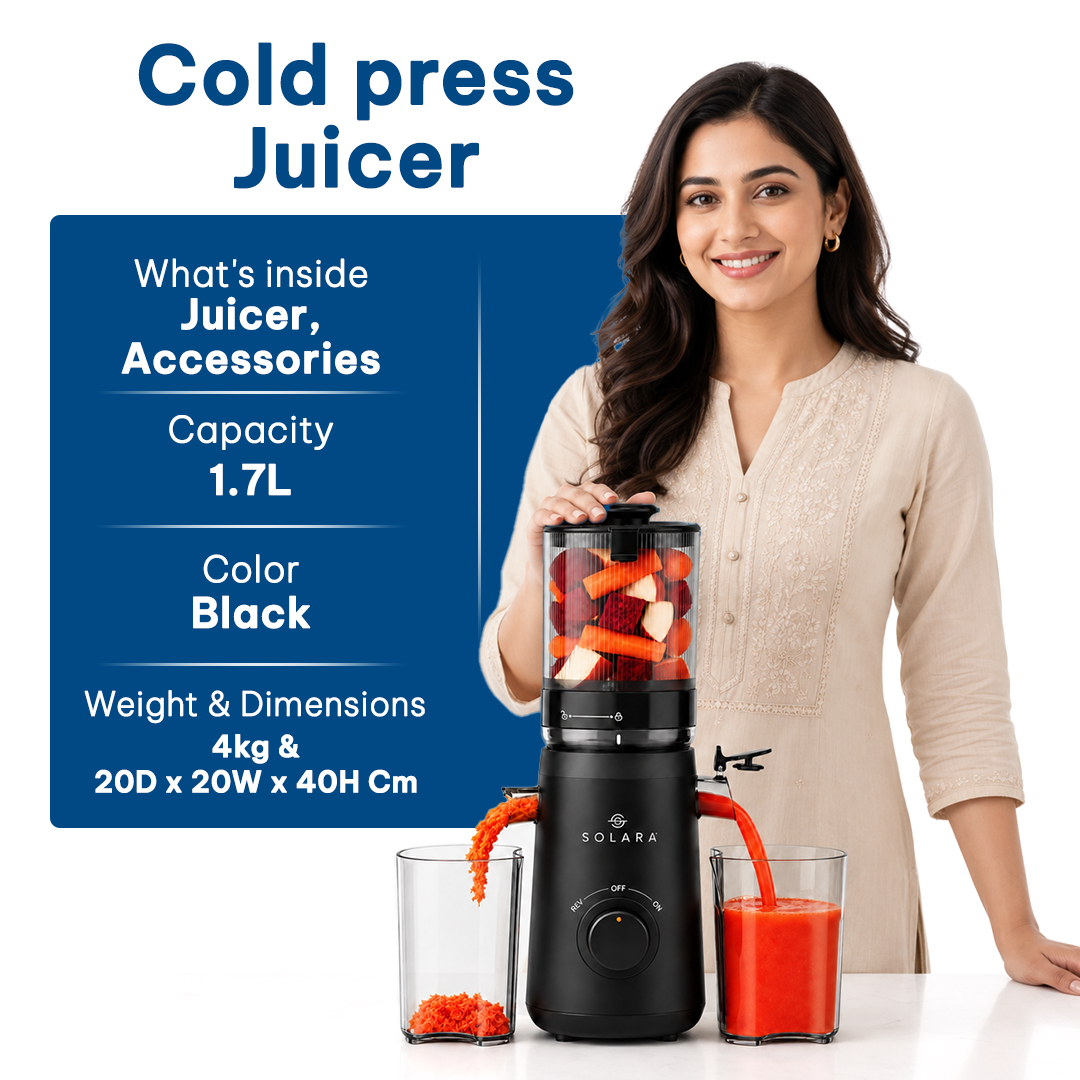
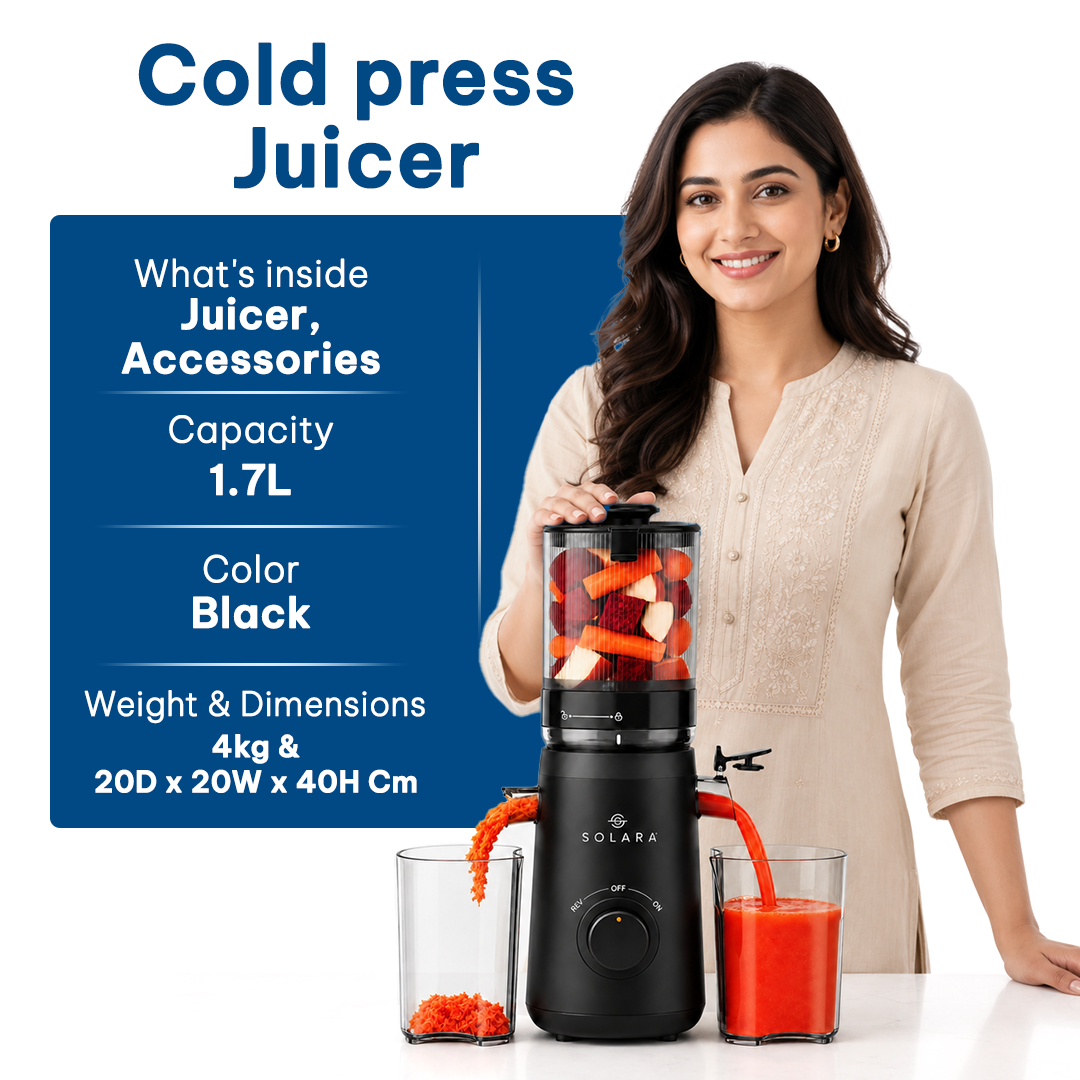
This SOLARA model uses slow masticating extraction for everyday fruit, vegetable and leafy-green juice, with quiet operation and removable parts for convenient countertop use.
What This Model Is Designed For
- Slow masticating extraction presses produce without the fast-spinning blade used by centrifugal juicers.
- Use the SOL-JUC-121 model for everyday fruits, vegetables, leafy greens and wheatgrass.
- Removable parts, an included cleaning brush and a 1-year warranty support a regular juicing routine.
Buyer's guide
Cold Press Juicer — How It Works and What to Juice
A cold press juicer — also called a slow or masticating juicer — crushes and presses produce with a slow-turning auger instead of shredding it at high speed. Less speed means less heat and less air whipped into the juice, which is why cold pressed juice has a higher yield, drier pulp and separates more slowly than centrifugal juice.
Cold press vs centrifugal vs mixer
| Cold press | Centrifugal | Mixer grinder | |
|---|---|---|---|
| Action | Slow crush and press | High-speed shred | High-speed shred |
| Leafy greens, wheatgrass | Handles well | Poor | Very poor |
| Ginger, turmeric, amla | Excellent | Fair | Needs straining |
| Heat & oxidation | Minimal | Higher | Higher |
| Noise | Quiet | Loud | Loud |
A mixer replaces none of this, and a juicer replaces none of a mixer's grinding work — they are different tools. The full comparison is in cold press juicer vs mixer grinder vs blender.
What juices well
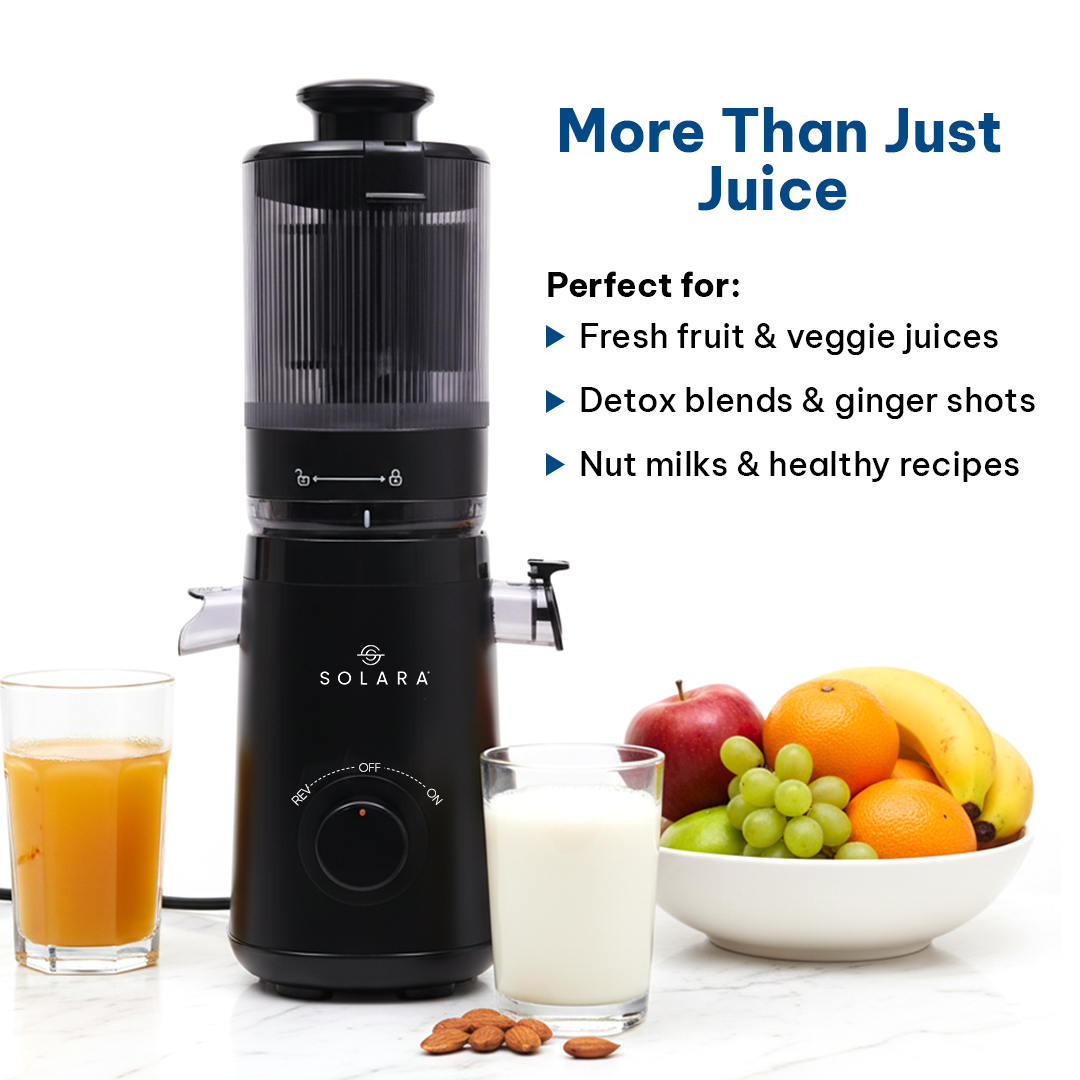
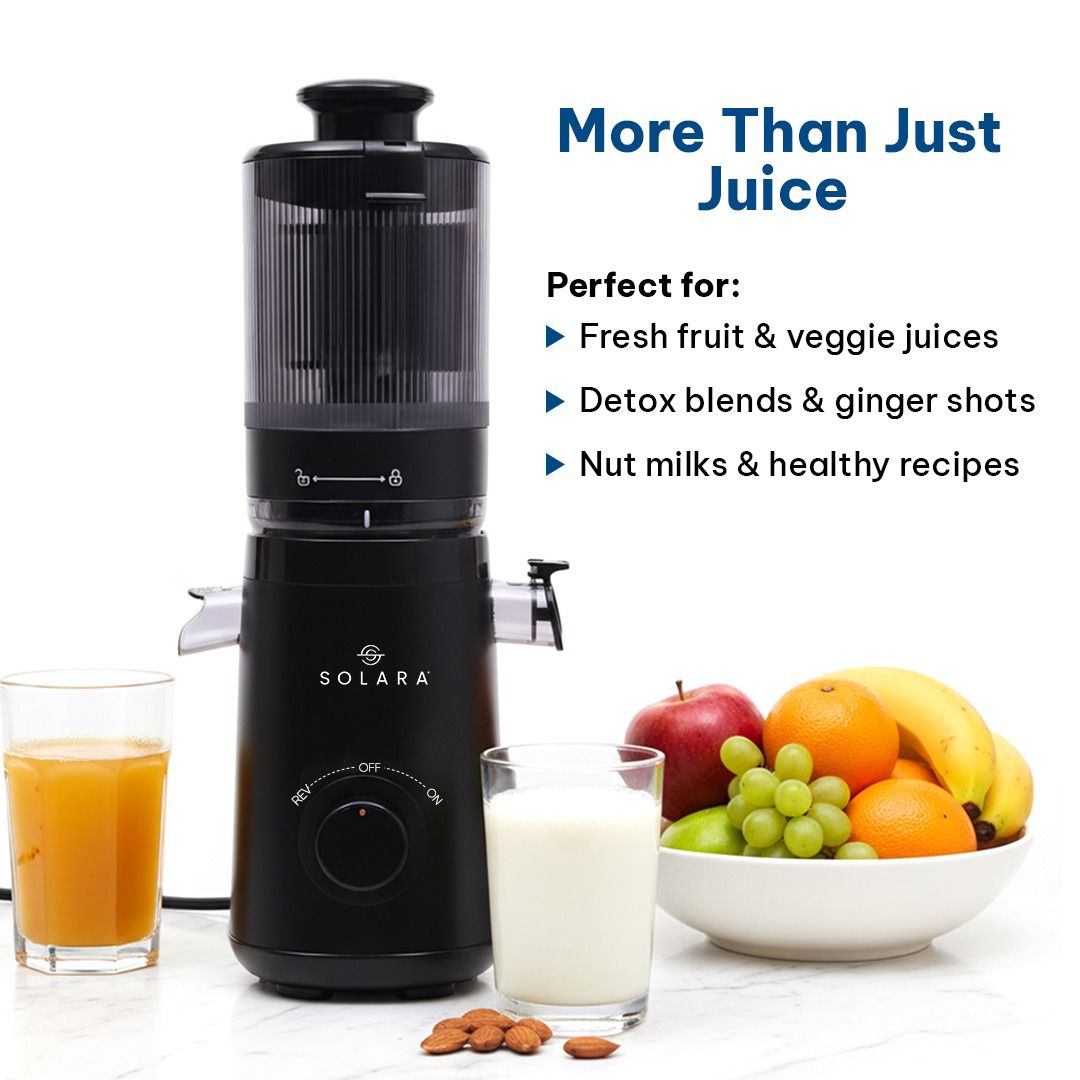
Carrot, beetroot, apple, cucumber, pineapple, pomegranate, celery, peeled citrus, and the ingredients that make a slow juicer worth owning at all — spinach, wheatgrass, ginger, turmeric and amla.
What does not: banana, mango, chikoo, avocado and papaya have no free juice to press and will clog the screen — blend those instead. Remove all hard stones. And a domestic juicer is not built for sugarcane, which needs a dedicated roller crusher.
Getting more juice out
- Feed slowly. The biggest single factor — a slow juicer is designed to be fed at the rate it can press.
- Alternate soft and hard produce so the hard pieces clear the screen.
- Roll leafy greens into a tight bundle and sandwich them between carrot or apple.
- Cut long fibres short — celery and stalks wrap the auger otherwise.
- Re-juice dense pulp once; it often yields another 10–15%.
Ingredient-by-ingredient detail is in what to juice in a cold press juicer.
Cleaning in two minutes
Rinse immediately — wet pulp comes off in seconds, dried pulp needs soaking, and that difference is why juicers end up in cupboards. Use the brush on the mesh screen, and air-dry the parts fully before reassembling. Turmeric and beetroot staining on plastic is cosmetic.
Common questions
How long does the juice keep? Best within a few hours; refrigerated in a filled, sealed container it usually holds up to 24 hours — noticeably better than centrifugal juice.
Is juice better than a smoothie? Not inherently. Juice removes fibre and concentrates nutrients; a smoothie keeps fibre and is more filling. Pick by what you want.
Should I throw away the pulp? No — carrot and beet pulp works in parathas, soups, dals and muffins.